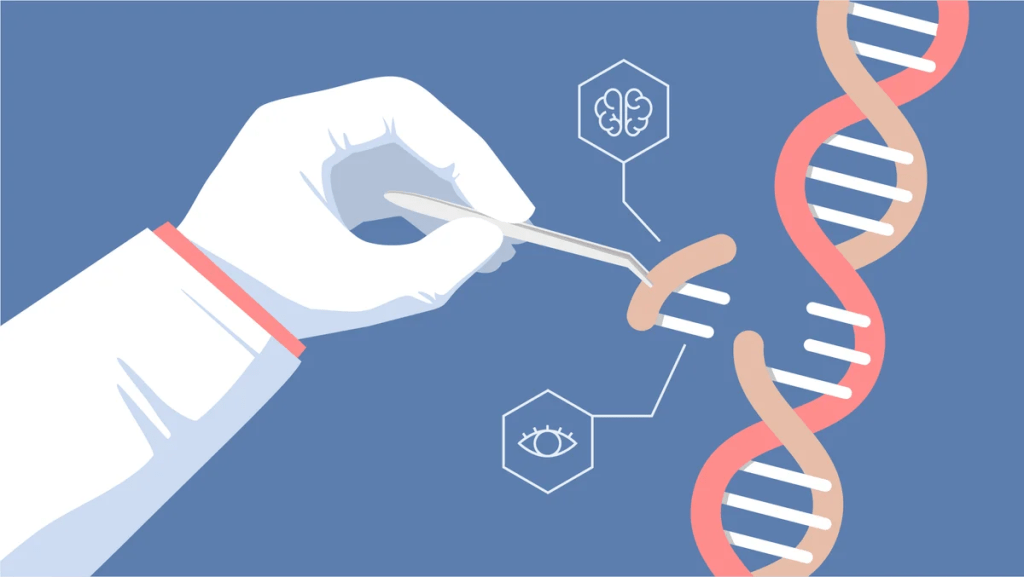
Through my exposure to scientific research, I’ve accepted CRISPR as a common, emerging technique for genetic experiments. However, in the back of my mind lay the question of how far CRISPR is progressing as a technique for human embryo genetic editing. This weekend, I did a deep dive and answered some of my questions.
Since the discovery of CRISPR cas-9 proteins which can target specific genes and alter them, startups and ambitious scientists have been commercializing gene-editing as a gateway to disease-free generations. On the surface, it seems like a picture-perfect solution: use existing technology to selectively eliminate hereditary genetic mutations that cause severe lifelong illnesses. But beneath the glossy promise lies a question science alone cannot answer: Should we?
Proponents argue that CRISPR represents one of the most revolutionary tools in modern medicine. It holds the potential to permanently reduce or even eliminate devastating disorders such as cystic fibrosis, sickle cell anemia, Huntington’s disease, and Duchenne muscular dystrophy in a population. By correcting mutations at the embryonic stage, we could prevent suffering before it begins, offering families the chance to break free from painful genetic legacies. Some even view this as moral responsibility to their future generations.
Still, the optimism surrounding CRISPR’s potential should be met with realism. While it is being used routinely in scientific experiments on cell cultures and lab animals, the science to meaningfully and safely alter a human embryo is not yet there. As a 2023 Nature news article by Heidi Ledford explains, off-target mutations, unintended genetic changes introduced during editing, remain a serious concern. Even a small error could introduce new health problems. And unlike somatic cell edits, which affect only one person, germline edits pass on changes to all future generations, making any mistake essentially irreversible.
Perhaps more importantly, there are many ethical considerations to be deliberated. CRISPR-based embryo editing could deepen existing inequalities due to its high cost. Those able to afford gene editing would avoid the immense medical, emotional, and financial burdens of genetic illness, while those without access could become trapped in a generational cycle of disadvantage. Health would directly reflect wealth. I am uncomfortable even thinking about the reemergence of eugenics under the guise of technological progress. I do not imagine (nor hope) that this dismal outlook becomes reality, but it is worth considering.
Additionally, to release something so powerful into the world without yet discussing the implications and regulations would be rash and consequential. For example, consider the untamed release of AI technologies. From its many unforeseen consequences, we realize that innovation usually outpaces governance. Therefore, as a global community, we must first establish guidelines and standards as protection.
CRISPR is undeniably a milestone in biotechnology. If used responsibly and safely, it has the potential to revolutionize human health. So perhaps the question is not whether CRISPR should be used to prevent genetic disorders, but when and how. Until science and ethics converge on this topic, I believe the wisest form of progress may be restraint.
 Telos and Tangents
Leave a comment