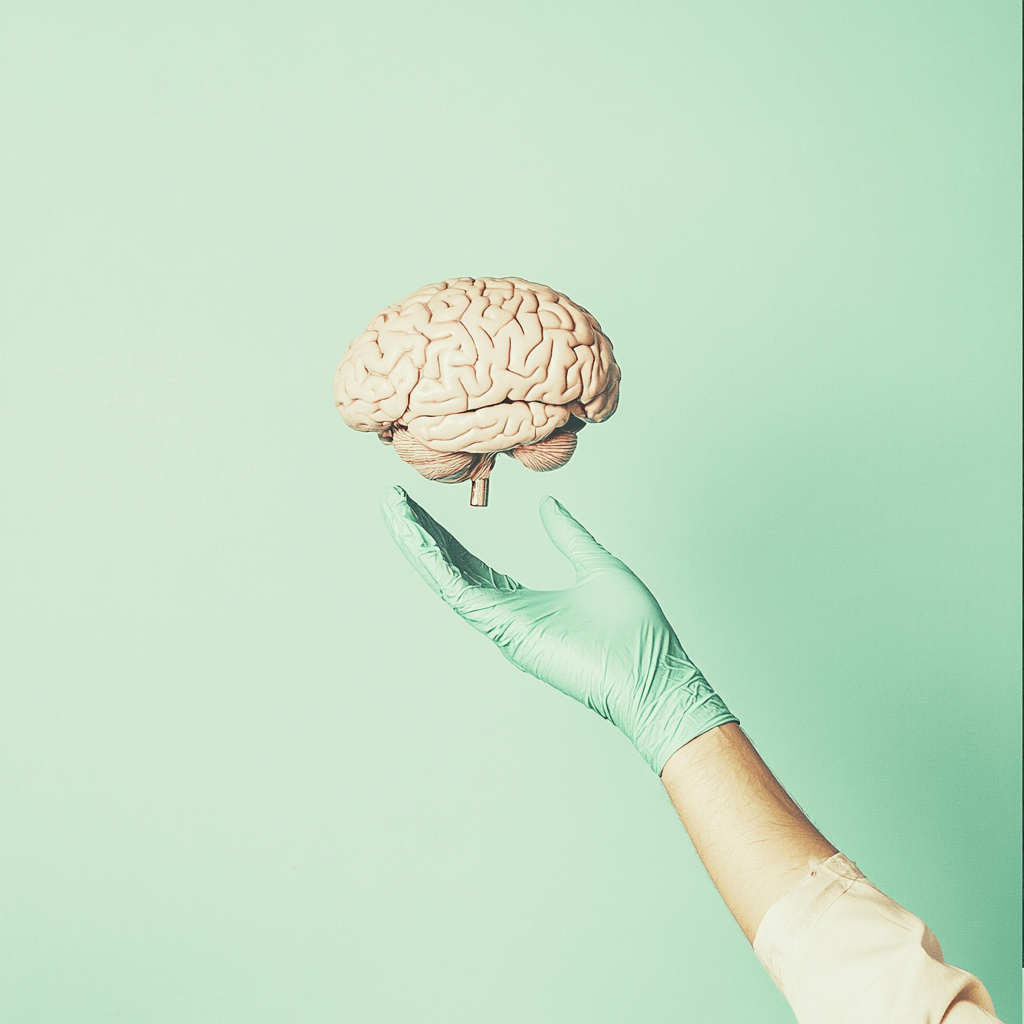
From cover to cover, Henry Marsh’s Do No Harm offers a raw look into the life of a neurosurgeon. This memoir gripped me, as both a reader and aspiring physician. It changed how I view doctors, the healthcare system, and the brain itself. Marsh writes with brutal honesty about tragic mishaps, the crippling guilt surgeons must endure, and fatuous hospital policies. But he also highlights the satisfying success stories and wonder for our brains that make the profession worth the long hours and tough years. After closing the book and taking a few deep breaths, I am more than ever filled with respect for medical professionals, especially surgeons. I am also all the more certain that neurosurgery must be an esoteric profession, suited only for those uniquely able to bear its emotional demands.
What struck me most was the constant navigation of moral gray area and the delicate balancing act this profession demands of those who pursue it. On a daily basis, neurosurgeons balance hope and realism when delivering prognoses as well as empathy and detachment when caring for patients. They also contend with bureaucratic rules that may not have patients’ or doctors’ best interests at heart. This book review provides my own insights and reflections on these tensions.
When discussing the operability of a patient’s illness, Marsh walks a thin line between hope and realism. As a neurosurgeon, one knows the cold probabilities of survival but finds it difficult to tell someone that they are unsavable. He recognizes the power of hope, even when it’s irrational. In several instances throughout the book, families refuse to let go of their rapidly-deteriorating or brain-dead loved ones. They hope against hope for a miracle that their child or husband will wake up or that the tumor will permanently shrink after the tenth operation. This helpless hope driven by pure love is hard to sway. Oftentimes, operations are performed despite the surgeons knowing the patient will not get better. At the end of life, perhaps all the families want is one last chance – a little more closure that they did everything possible. Perhaps all the patients want is a few more days to say goodbye. Perhaps these immaterial, abstract feelings are just as valuable as measurable medical outcomes.
As a doctor, one’s job is to ‘do no harm’ and to aid patients in their most vulnerable moments. A doctor cannot think solely from a scientific perspective but must also adopt a humanitarian one. Sometimes, humans are irrational creatures and choose emotion over logic and love over likelihood. And if operating might prolong suffering but not operating would destroy hope, the decision extends beyond medicine into morality.
— While on a mission trip to Ukraine, Marsh agrees to operate on a young girl named Tanya, even though her tumor was the largest he had ever seen, and neither he nor anyone he knew had tried to remove a tumor of that size in a child before. It seems that even Marsh hoped against hope that the procedure would work. —
When operations go wrong due to human error or unexpected complications, neurosurgeons bear the heavy weight of responsibility every day.
“Doctors often console each other, when things have gone badly, that it is easy to be wise in retrospect. I should have left Tanya in Ukraine. I should have told her mother to take her back to Horodok, but instead I brought her to London” (Marsh 235).
People say that a good doctor must have compassion in order to think in the patient’s shoes and offer wise counsel. But I wonder: how much empathy can a doctor embody without breaking down? After all, if one experienced the pain and turbulent whirlwind of emotions of every patient, surely one would be crushed under the emotional weight?
Tanya survived the operation but lost the ability to move her face, speak, swallow, and breathe on her own. Marsh was devastated and filled with immense guilt when he visited her in Ukraine years later. To survive in such a high-stakes field, a neurosurgeon must be caring enough to act with humanity but also create just enough distance to keep going. It’s a paradox. The very compassion that draws someone to medicine can also threaten to undo them.
I would like to share this beautifully-written, heart wrenching paragraph about the death of another patient, a moment that reveals the humanness of doctors beneath their strong facade.
“I drove away in a turmoil of confused emotions…and furiously cursed the cars and their drivers as though it was their fault that this good and noble man should die and leave his wife a widow and his young children fatherless. I shouted and cried and stupidly hit the steering wheel with my fists. And I felt shame…at my loss of professional detachment and what felt like the vulgarity of my distress compared to his composure and his family’s suffering, to which I could only bear impotent witness” (Marsh 153).
I cannot think of another career, except maybe law, that would demand such emotional engagement.
Lastly, doctors wrestle with the frustrating bureaucratic red tape of healthcare systems which often impedes patient care. Marsh frequently laments issues such as ITU bed shortages, overly complicated computerized x-ray systems, and work hour policies intended to prevent physician burn out but in reality, create chaos when trying to schedule urgent procedures.
Truly, my respect for neurosurgeons has grown exponentially. They take on such a hard job, but one that must also be extraordinarily fulfilling. It is these moments of impossible dilemmas and fragile hope that make the triumphs so satisfying. I imagine that in their final moments, many physicians can look back on their career with pride and bittersweet memories. After all, isn’t it a rare type of gift to have experienced so profoundly and meaningfully even if it sometimes hurts to hold?
Up Next!
The next novel on my list is The Tale of the Dueling Neurosurgeons, a history of the most peculiar and elusive neurological conditions. Now that I have gained insight into the life of a neurosurgeon, I am eager to delve deeper into the fascinating and arcane science of the brain’s inner workings.
 Telos and Tangents
Leave a comment